
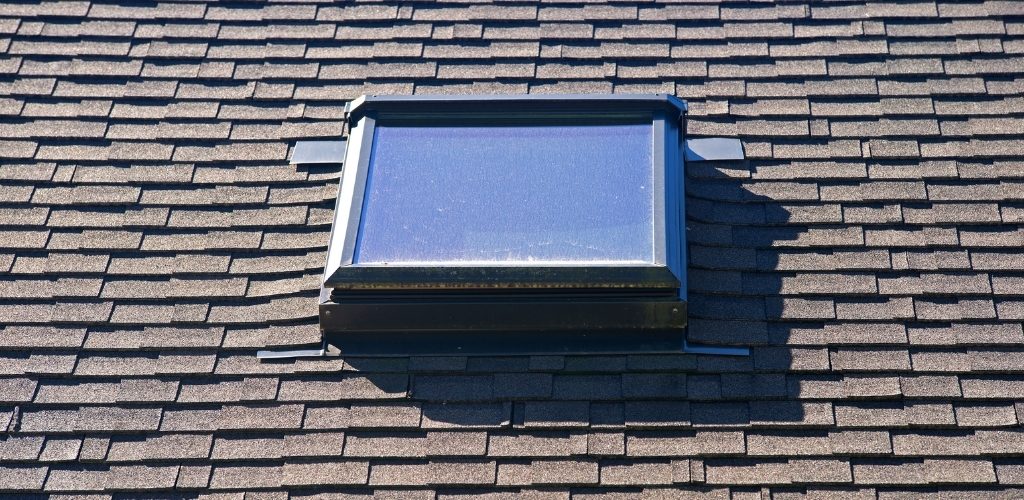
A brown ceiling stain beside a skylight may look like a window problem. In many Pleasant Valley homes, however, the leak starts where the skylight meets the roof. Rain, melting snow, and wind-driven moisture can enter around flashing, underlayment, or surrounding shingles, then travel before appearing indoors.
That is why homeowners searching for “skylight repair near me” should arrange a roof-level evaluation. Repainting the stain or adding interior caulk does not address the source of the water entering above the ceiling.
Quick Facts
- A skylight leak often begins in the roof assembly, not the interior trim.
- Failed flashing, damaged shingles, and aging underlayment are common water-entry points.
- Water stains may appear several feet from the actual leak because moisture can travel along framing.
- Sealant may provide temporary protection, but it rarely corrects defective flashing or hidden roof damage.
- A professional inspection can determine whether the most practical solution is repairing the surrounding roof, replacing the skylight, or coordinating both as part of a larger roofing project.
Why Skylight Leaks Are Roof Problems
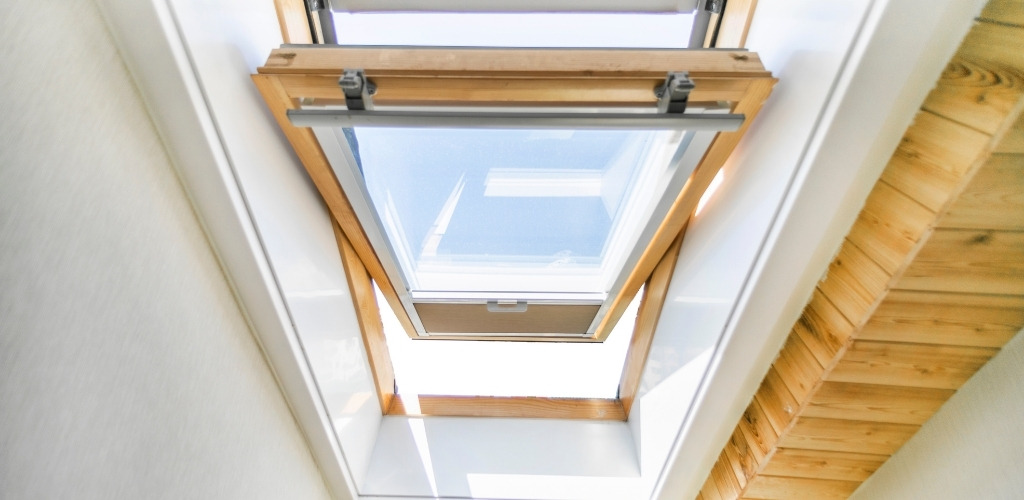
A skylight creates an opening through the roof’s water-control layers. The unit, flashing, underlayment, and roofing material must work together to direct water downslope.
U.S. Department of Energy guidance explains that skylights are vulnerable points in a roof’s water-management system. The installation guidance emphasizes overlapping materials from bottom to top so water sheds over the layers rather than behind them.
The 2024 International Residential Code also requires flashing around roof openings to prevent moisture from entering through roof penetrations. Although local requirements can vary, the principle remains consistent: a skylight needs properly integrated roof flashing.
Common causes of water or moisture around a skylight include:
- Loose, corroded, missing, or incorrectly layered flashing
- Cracked, lifted, or deteriorated shingles near the skylight
- Aged, torn, or separated underlayment
- Debris that slows drainage above the unit
- Failed gaskets, glazing seals, or joints in the skylight frame
- Condensation mistaken for rainwater leakage
How to Trace a Skylight Leak
1. Document the Interior Symptoms
Note when the stain expands or darkens. A stain that worsens during rain suggests exterior water entry. Moisture that appears mainly during cold weather may involve condensation. Record peeling paint, damp drywall, musty odors, and discoloration around the shaft.
2. Follow the Stain Upward
Water can move along rafters, roof decking, insulation, and fasteners, so the visible stain may not sit directly below the entry point. A professional should inspect the interior staining, roof coverings, underlayment, sheathing, framing, and skylight unit to trace the source.
3. Inspect the Surrounding Roof
A roofer should examine the head, sides, and sill of the skylight, along with nearby shingle courses. Darkened decking, soft wood, rusted fasteners, or repeated patches may indicate that water has moved beyond a simple surface gap.
4. Separate Temporary Control From Permanent Repair
A tarp or carefully placed container may limit immediate interior damage. Roof cement and caulk can sometimes reduce water entry temporarily, but they should not replace correctly installed flashing. Walking on a wet or steep roof also creates a serious fall risk, so a qualified professional should handle the exterior diagnosis.
Repair or Skylight Replacement?
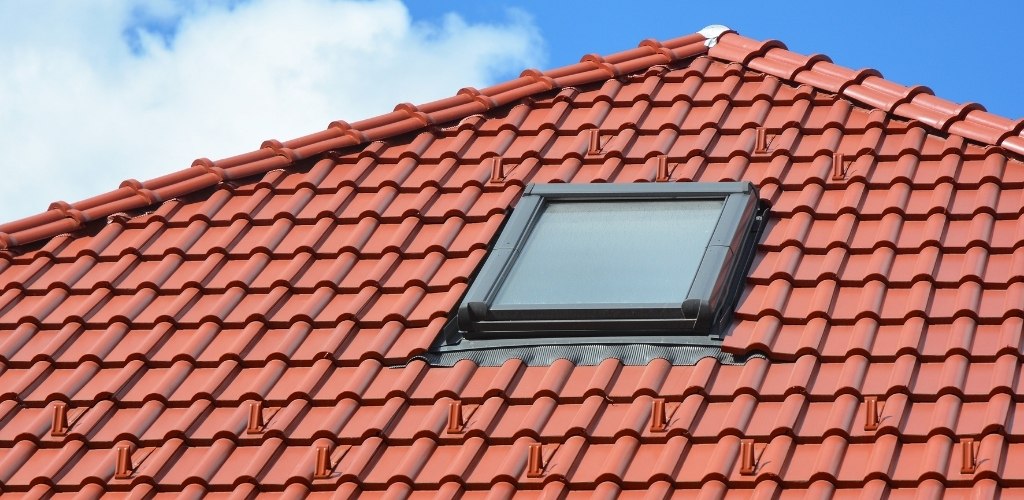
Repair may be appropriate when the skylight remains sound and the problem is limited to flashing, nearby shingles, or a small underlayment section. The repair should restore the layered drainage path, not merely cover the suspected opening.
Skylight replacement may make more sense when the frame is cracked, the insulated glass has failed, operable components no longer seal, repeated leaks have damaged the curb, or the frame joints, gaskets, or weatherstripping have deteriorated.
Replacing the skylight during a larger roof replacement project can also be efficient. This approach allows the contractor to coordinate the skylight, underlayment, flashing, and new shingles as one water-management system.
What Affects Skylight Replacement Cost?
Skylight replacement cost depends on the unit’s size and type, roof pitch, roof access, roofing material, interior finish work, and the condition of the decking or framing. Costs can rise when hidden moisture damage becomes visible after the shingles and flashing are removed. A written estimate should itemize the skylight, flashing kit or custom metalwork, roofing repairs, disposal, labor, and any interior restoration.
Frequently Asked Questions
Can a leaking skylight be repaired without replacement?
Yes, when the unit is intact and the leak comes from repairable flashing, shingles, or underlayment. A professional inspection should confirm the source before work begins.
Why is the water stain beside the skylight instead of directly below it?
Water often travels along decking, rafters, or the skylight shaft before reaching the drywall. The stain shows where the moisture became visible, not necessarily where it entered the roof.
Will caulk stop a skylight leak?
Caulk may slow a minor surface leak, but it cannot rebuild improperly layered flashing or replace damaged roofing materials. Repeated caulking can also hide the source and delay necessary repair.
Should the skylight be replaced during roof replacement?
It is often worth evaluating the skylight during roof replacement. Coordinating both projects can reduce future disruption and allow the new roofing layers to integrate correctly with the skylight.
How soon should a leaking skylight be inspected?
Schedule an inspection promptly. Delays can allow moisture to damage insulation, decking, drywall, and surrounding roofing materials.
Request a Roof Inspection in Pleasant Valley
Water around a skylight can damage insulation, decking, drywall, and framing when the source remains unresolved. Roofer of Pleasant Valley can inspect the skylight and surrounding roof, explain whether repair or replacement is appropriate, and provide a free estimate.
Discuss your roofing project today.