
What’s in This Guide
- What Is a Roofing Square?
- Why Measured Roof Area and Purchased Material Differ
- How Roof Replacement Companies Estimate Roofing Waste Factor
- How Material Needs Can Vary
- Frequently Asked Questions
- Discuss Your Roof Replacement Estimate
A measured roof may require more material than its surface area alone suggests. That difference is not automatically an estimating error. Roof replacement companies account for materials that may be trimmed, overlapped, or unsuitable for reuse after being fitted around edges, intersections, and other roof features.
For Pleasant Valley, NY homeowners comparing roof replacement estimates, understanding this distinction can make material quantities easier to evaluate.
Quick Facts
- Roof area and the amount of material ordered are not always identical because installation creates cuts, overlaps, and unusable offcuts.
- One roofing square equals 100 square feet of roof surface area.
- Hips, valleys, dormers, multiple facets, and irregular layouts can increase cutting and material handling.
- A roofing waste factor may be added after measuring the roof, but the amount depends on roof geometry, material, layout, and contractor measurements.
What Is a Roofing Square?
A roofing square is a standard way contractors organize roof measurements when estimating materials for a project. It provides a consistent unit for planning material quantities and comparing different sections of a roof.
The number of roofing squares needed can vary depending on the roof’s size, shape, slope, and overall complexity. Contractors may also consider additional material requirements when preparing the final estimate.
Why Measured Roof Area and Purchased Material Differ
The measured roof area and the amount of material purchased are not always the same. Roof shape, cutting requirements, and installation rules can all affect how much material a contractor needs.
Roof Shape and Complexity
A simple gable roof may have relatively long, regular courses. More complex rooflines can include hips, valleys, dormers, sidewalls, skylights, chimneys, and shorter roof sections.
These features create more transitions and can require additional fitting during installation.
Cutting and Reusable Material
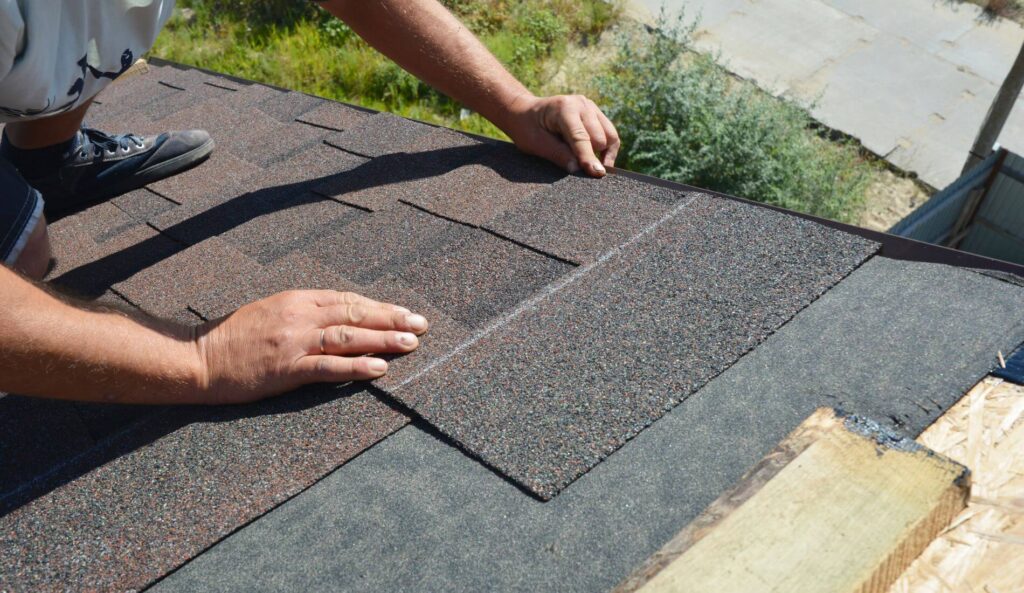
Roofing materials are rarely installed without cuts. Some trimmed pieces can be reused in other areas of the roof, while others may not fit the remaining layout.
The amount of reusable material depends on the roof design and the roofing product being installed.
Installation Requirements
Contractors must also follow the roofing product’s installation requirements, including exposure, offsets, fastening methods, and alignment.
Because of these requirements, installers cannot always use every leftover piece simply to reduce material waste.
How Roof Replacement Companies Estimate Roofing Waste Factor
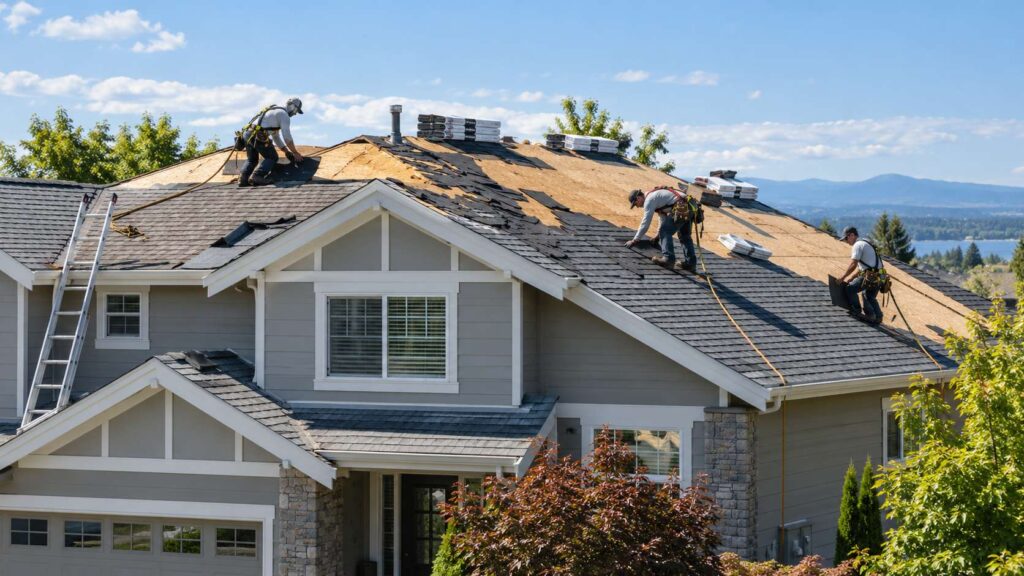
Contractors generally work through the calculation in stages:
- Measure each roof plane. Determine the surface area of the roof sections while accounting for the roof’s actual slope rather than relying only on the building footprint.
- Convert the area to roofing squares. Contractors use the measured roof area to determine the number of roofing squares needed for planning.
- Map complex geometry. Identify hips, valleys, rakes, ridges, dormers, penetrations, and intersecting planes because these features can change cut patterns and accessory requirements.
- Evaluate the roofing material and layout. Shingle dimensions, required offsets, valley methods, starter layouts, ridge treatments, and manufacturer instructions can affect how efficiently materials are used.
- Add material overage. Roof replacement companies account for an appropriate roofing waste factor and adjust the final order to match how the selected roofing material is packaged and sold.
How Material Needs Can Vary
The amount of roofing material ordered is not always identical to the measured roof area. Contractors typically consider several project-specific factors before determining how much material to purchase.
Roof Shape and Layout
Roofs with multiple sections, hips, valleys, dormers, or other changes in direction often require more cutting and fitting than simpler rooflines. These features can affect how efficiently roofing materials are used during installation.
Roofing Material and Installation Method
Different roofing products have their own dimensions, layout requirements, and installation patterns. Some materials may produce reusable offcuts, while certain roof designs can require additional trimming around edges and transitions.
Additional Roofing Components
The final material order may also include items beyond the primary roof covering. Starter materials, ridge caps, flashing, underlayment, and other accessories may be calculated separately depending on the roofing system.
Why Material Overage Varies
There is no single waste percentage that applies to every roof. Roof replacement companies typically base material overage on the roof’s geometry, product requirements, installation layout, and project measurements.
Frequently Asked Questions
Can roof access affect material planning for a Pleasant Valley, NY home?
Yes. Limited access, landscaping, building height, and available staging areas can influence how roofing materials are delivered, stored, and moved during a roof replacement project.
Can hidden roof conditions change the material order?
They can. Roof replacement companies may discover damaged decking or other concealed conditions after existing materials are removed. Additional materials may be needed depending on what the contractor finds.
Can shingle color or product availability affect material planning?
Yes. Contractors may consider product availability when ordering materials so the roofing system remains visually consistent. Availability can vary by manufacturer, product line, and supplier.
Does limited storage space affect a roof replacement in Pleasant Valley?
It may. Some Pleasant Valley properties have less room for material staging than others. Contractors can adjust delivery and handling plans based on the property and project requirements.
Should Pleasant Valley homeowners keep leftover roofing materials?
Keeping a small amount of matching material may be useful for future repairs. Whether extra material is available depends on the final order, installation process, and roofing product used.
Discuss Your Roof Replacement Estimate
If you are planning a roof replacement in Pleasant Valley, NY, ask how measured area, roofing squares, waste, and accessory materials are represented in the estimate. Roofer of Pleasant Valley can review the roof and discuss the project scope.