
What’s In This Guide
Before recommending a commercial roof system, a contractor needs to understand more than what is visible at the membrane surface. Water can enter through defects and spread within insulation or other roof components without producing obvious interior leaks at every affected location.
That is why commercial roofing contractors may use core cuts and moisture scans during assessment and project planning. These methods answer different questions. Used together, they can reduce guesswork and help define the actual condition of the existing assembly.
Quick Facts
- Core cuts reveal the roof assembly at specific locations, including membrane layers, insulation type and thickness, and visible moisture conditions.
- Moisture scans help map suspect moisture across a broader roof area, but their readings require professional interpretation and verification.
- The methods provide different types of information. Selected roof core samples can confirm or challenge nondestructive survey findings.
- The amount and location of wet insulation can materially affect whether targeted repair, a recover system, or replacement is appropriate.
- Commercial roofing contractors should combine diagnostic results with drainage, membrane condition, deck condition, code requirements, and system compatibility.
What Does a Roof Core Sample Reveal?
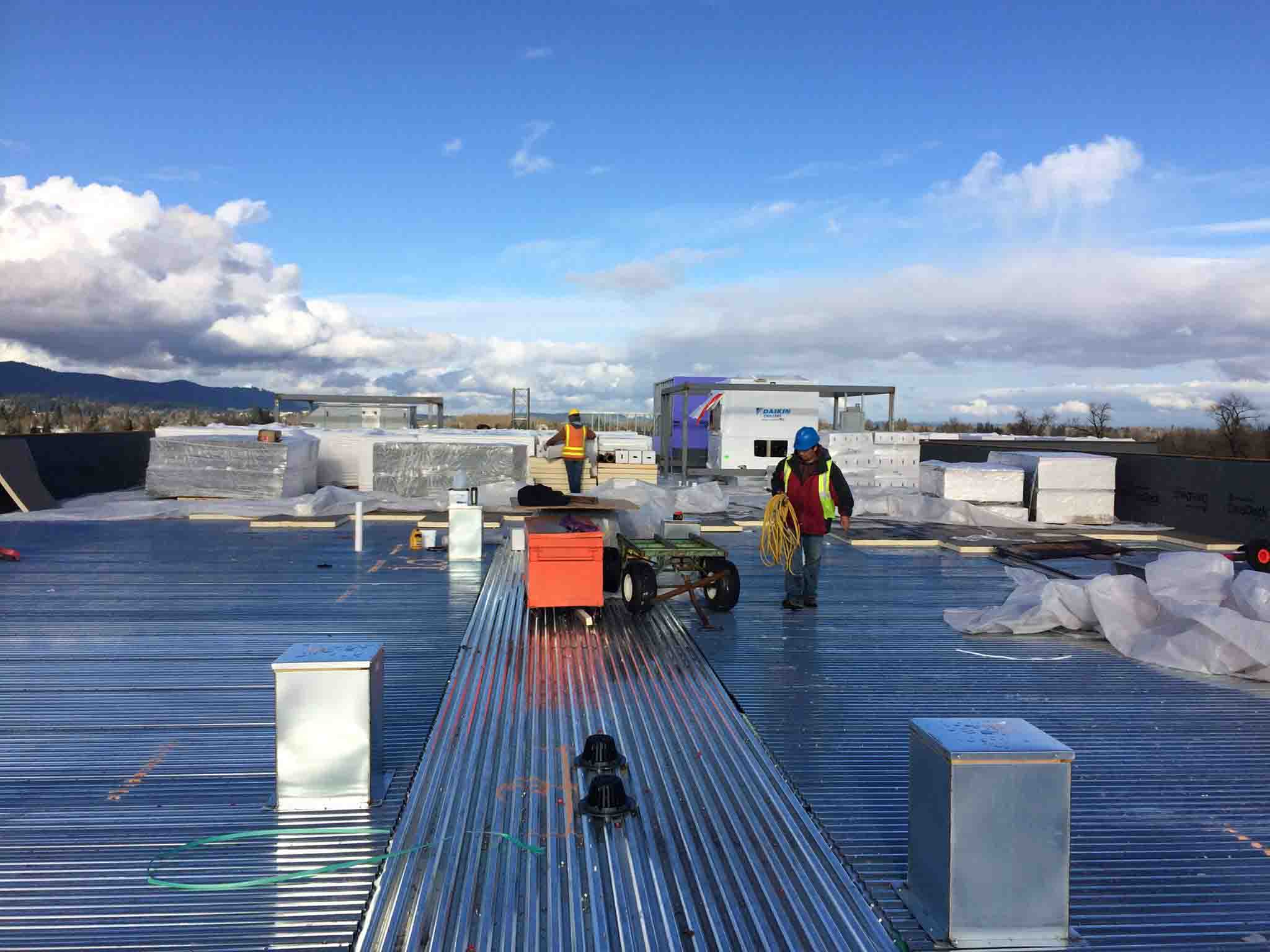
A roof core sample is a small, controlled opening made through the existing roof assembly at a selected location. It lets the contractor physically inspect the layers below the surface.
A core can identify membrane and insulation layers, approximate insulation thickness, substrate conditions at that spot, and signs of trapped moisture. It can also help verify whether the existing assembly matches available records. Understanding the existing roof layers is particularly important when planning a replacement, just as complex rooflines can affect roofing material waste and the amount of material required for installation.
Its main limitation is coverage. A core describes one small location, not the entire roof. A dry core does not prove that insulation elsewhere is dry, while a wet core does not establish how far moisture extends. Contractors therefore choose core locations strategically and properly close the openings after inspection.
What Does a Commercial Roof Moisture Survey Show?
A commercial roof moisture survey uses nondestructive methods to identify areas that respond differently from surrounding roof sections. Depending on the roof construction and survey method, those differences may indicate moisture within the assembly.
Infrared, nuclear, capacitance, and other methods work on different physical principles and have different limitations. The National Roofing Contractors Association summarizes U.S. Army Corps of Engineers research indicating that selected core samples should be used to verify nondestructive survey findings.
A moisture scan is a mapping tool rather than a direct interior view. Results depend on weather, roof materials, and proper interpretation. Assessments should also check entry points like flashing around penetrations, where issues similar to those needing skylight leak repair in Pleasant Valley can admit water.
How Contractors Use Both Methods to Plan the Roof System
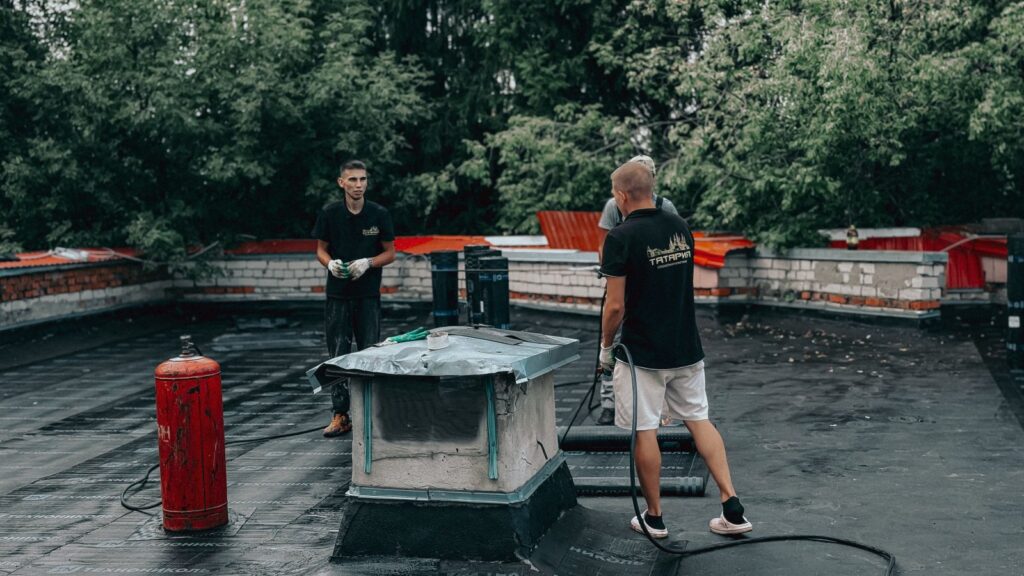
- Inspect the roof. The contractor documents membrane condition, penetrations, flashings, drainage, visible damage, and leak history.
- Map suspect moisture. A suitable moisture survey can identify patterns or areas that warrant closer investigation.
- Verify with core cuts. The contractor samples selected locations to confirm assembly details and investigate scan indications.
- Compare findings with project constraints. Deck condition, wet insulation, code requirements, manufacturer requirements, drainage, and compatibility all influence the available options.
- Define the scope. Localized problems may support targeted repairs. A recover may be considered only when the existing assembly and applicable requirements allow it. More extensive moisture, deterioration, or incompatible conditions may point toward replacement.
Why Wet Insulation Can Change the Recommendation
Wet insulation matters because moisture can reduce thermal performance and contribute to deterioration within a roof assembly. Moisture can enter roofing systems from exterior leaks, construction moisture, or interior vapor movement, making investigation important before reroofing decisions are made.
Contractors must identify where moisture is located, how far it reaches, and which materials are affected to avoid building over damaged structures. These findings clarify what a roof replacement project should include and define the scope of work.
Frequently Asked Questions
How long does a commercial roof moisture survey take?
Survey time depends on roof size, layout, access, weather conditions, and the diagnostic method being used. Larger or more complex roofs generally require more time to scan and verify.
Can core cuts damage a commercial roof?
Core cuts are intentionally invasive, but they are made in controlled locations and should be properly sealed after inspection. When performed correctly, they provide useful assembly information without leaving the roof exposed.
When is the best time to perform a roof moisture survey?
Conditions depend on the survey method. Infrared, capacitance, and nuclear testing each have specific environmental and surface requirements, so contractors should schedule testing when conditions are suitable for reliable readings.
Can moisture surveys help estimate repair scope?
Yes. Mapping suspect moisture can help contractors identify whether problems appear localized or widespread, which supports more accurate repair, recover, or replacement planning. For roofs with visible exterior damage, such as displaced or missing shingles, understanding when missing shingles require prompt roof repair can also help property owners recognize conditions that warrant further investigation.
Who should perform commercial roof moisture testing?
Testing should be performed or interpreted by qualified professionals familiar with the specific survey method, roof assembly, equipment limitations, and verification procedures.
Make the Recommendation Fit the Roof
Scheduling a professional roof inspection in Pleasant Valley can help identify visible defects and determine whether additional testing is necessary before selecting a repair or replacement approach.
If you are planning repairs, a roof recover, or a replacement, contact Roofer of Pleasant Valley to discuss your roofing project and request a roof inspection.
Related Posts